
Sports Field Construction in Sydney: The Process, Costs & Choosing a Contractor
A build-it-right guide for the councils, clubs and schools who sign off the project, not just the ones who mow it.
A sports field looks simple from the sideline: green, flat, ready to play. What sits underneath decides whether it drains after a storm, survives a full winter season, and gives players a safe, consistent surface for years. Get the build right and a council or club owns an asset that performs for a decade or more. Get it wrong and you inherit waterlogged wings, hard-baked centres and an early renovation bill.
This guide walks through what sports field construction actually involves in Sydney and Western Sydney, the natural versus synthetic decision, realistic timelines, and how councils, clubs and schools should choose a builder. It is written for the people who sign off the project, not just the ones who mow it.
What sports field construction actually involves
Whether you are building a new field or reconstructing a tired one, the discipline is the same. A sporting surface is a layered system engineered to shed water, hold its shape under load, and support turf (or anchor a synthetic carpet) through heavy, repeated use. The visible turf is the last layer laid and the first that people judge, but it is only as good as everything beneath it.
Here is what a typical natural-turf build works through, in order.
1. Site investigation and design
Before a machine turns up, the site is understood: existing soil type, how water moves across and through it, levels and falls, and any services already in the ground. This stage sets the design, the target falls, the drainage strategy, the rootzone specification, and how the field ties into surrounding paths, kerbs and stormwater. Skip it and every later stage inherits the guess.
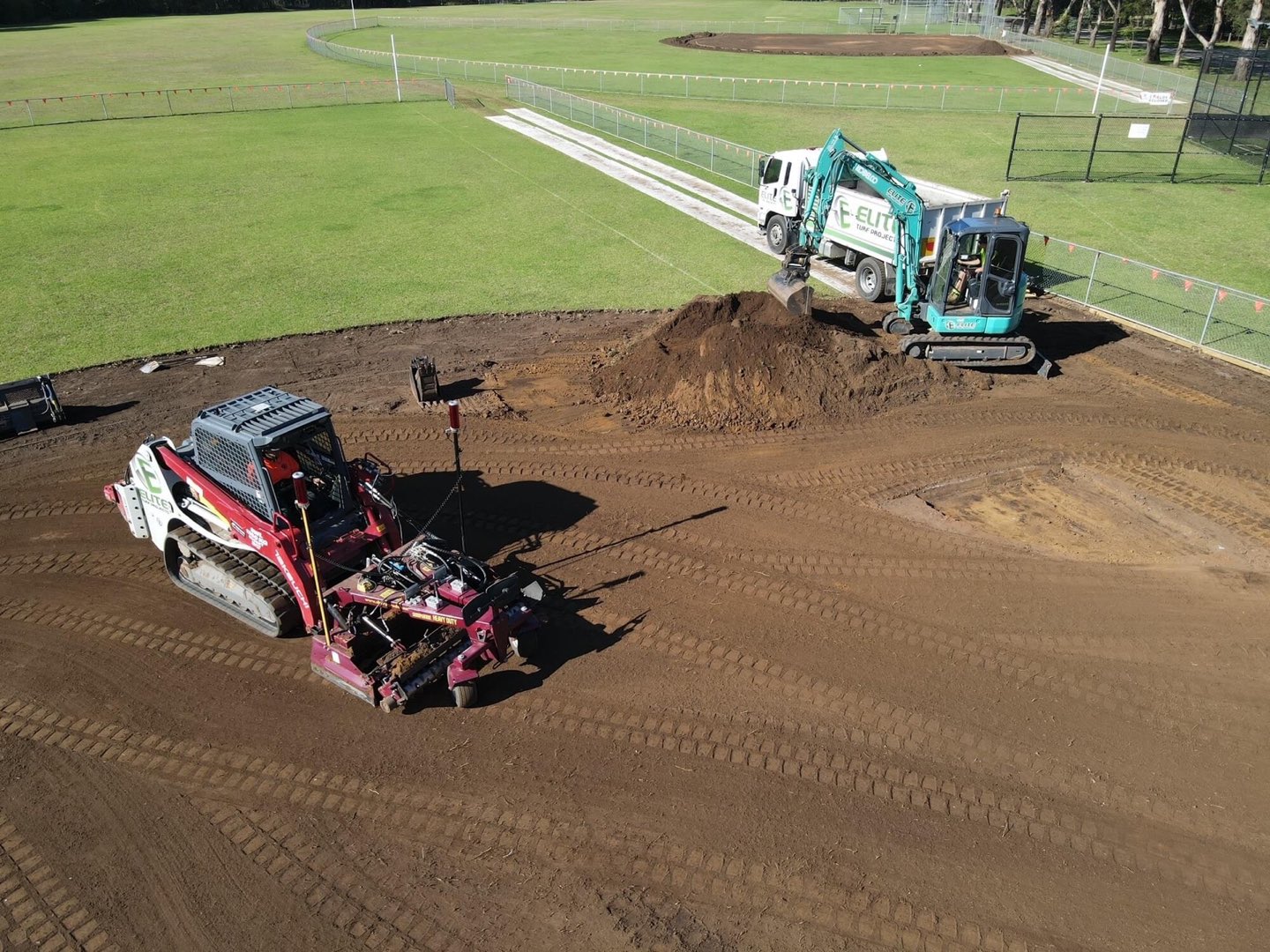
2. Earthworks and site preparation
The field is stripped, shaped and graded to the design levels. Accurate falls here are critical: a natural-turf field needs enough gradient to move water toward the drainage, but not so much that play suffers. Poor levels cannot be fixed with turf later; they get locked in.
3. Drainage
Drainage is where a field is won or lost. A well-built field combines surface falls with a subsurface network, typically a grid or herringbone of perforated pipe in gravel-filled trenches, that collects water moving down through the profile and carries it away. In heavy clay soils, sand slitting or gravel banding links the surface to the pipe drains.
4. Rootzone and profile construction
On top of the drainage sits the rootzone, the engineered layer the grass grows in. This is not topsoil scraped from site. It is a specified profile, often sand-dominant or an amended sand blend, chosen to balance drainage, water holding and root support for the intended level of play. The right rootzone lets a field drain fast and still stay alive through summer.
5. Irrigation
An automatic irrigation system delivers even coverage across the whole surface, with head layout, spacing and zoning matched to the field. Uneven irrigation shows up fast as dry, worn patches and stressed turf. On new builds it goes in before turf, so the surface can be brought on evenly from day one.
6. Turf establishment
The field is turfed or sown with a grass suited to the climate and the way the ground will be used. Establishment is a managed period, not a single day: the turf needs time, water, feeding and light-use restrictions to knit into the rootzone and build a strong root system before it takes full match loads. Hand a field over too early and the surface has no foundation.
Synthetic and artificial turf fields
Synthetic fields follow the same foundations, investigation, earthworks, drainage and precise levels, but replace the rootzone and turf stages with an engineered base and a carpet system. A compacted, laser-accurate base course is built to tight tolerances, then the artificial turf is laid, seamed, anchored and, depending on the system, filled with sand or performance infill. Line marking is built in.
The tolerances on a synthetic field are unforgiving. Because the carpet telegraphs every bump in the base, base preparation is where the quality of the install is decided. Artificial grass for sport also needs its own drainage, plus careful thought about surface heat and infill choice for player comfort and safety.
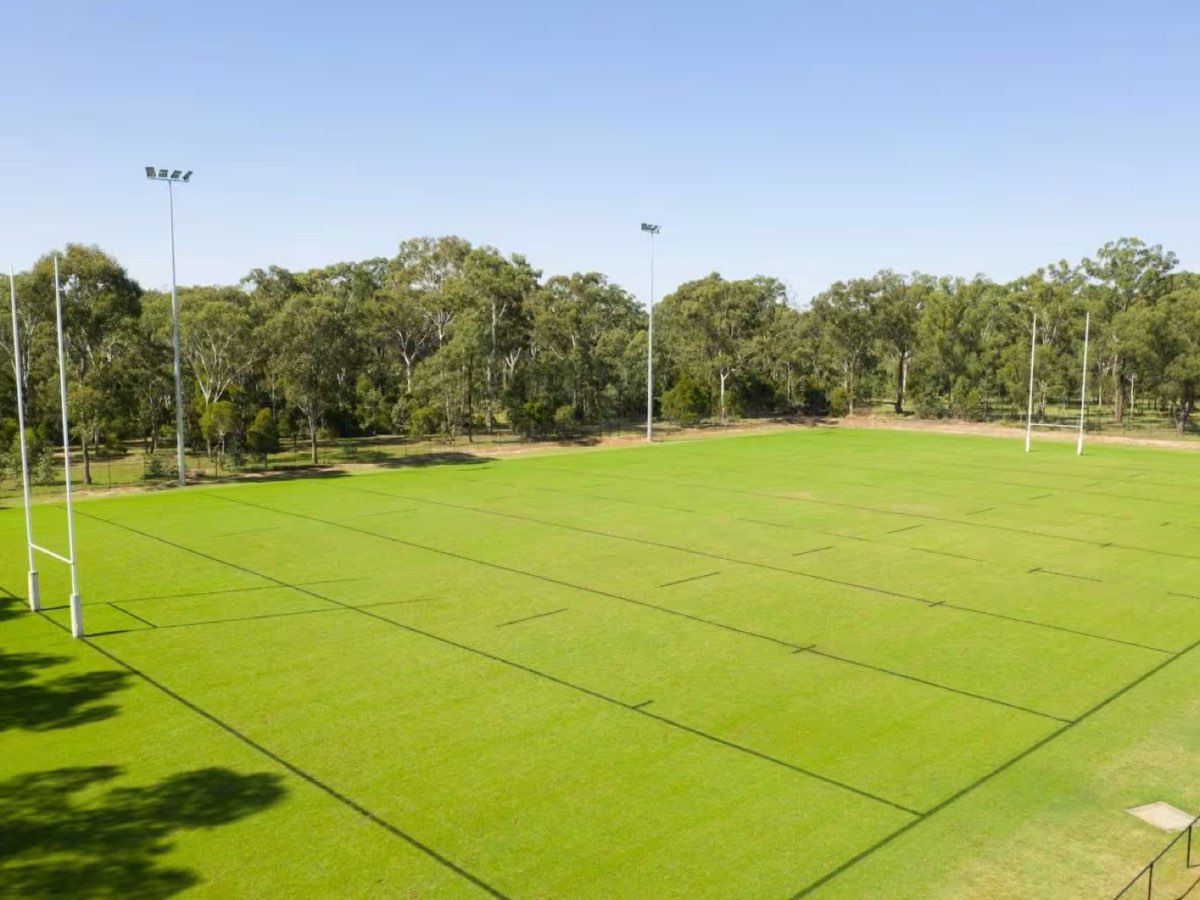
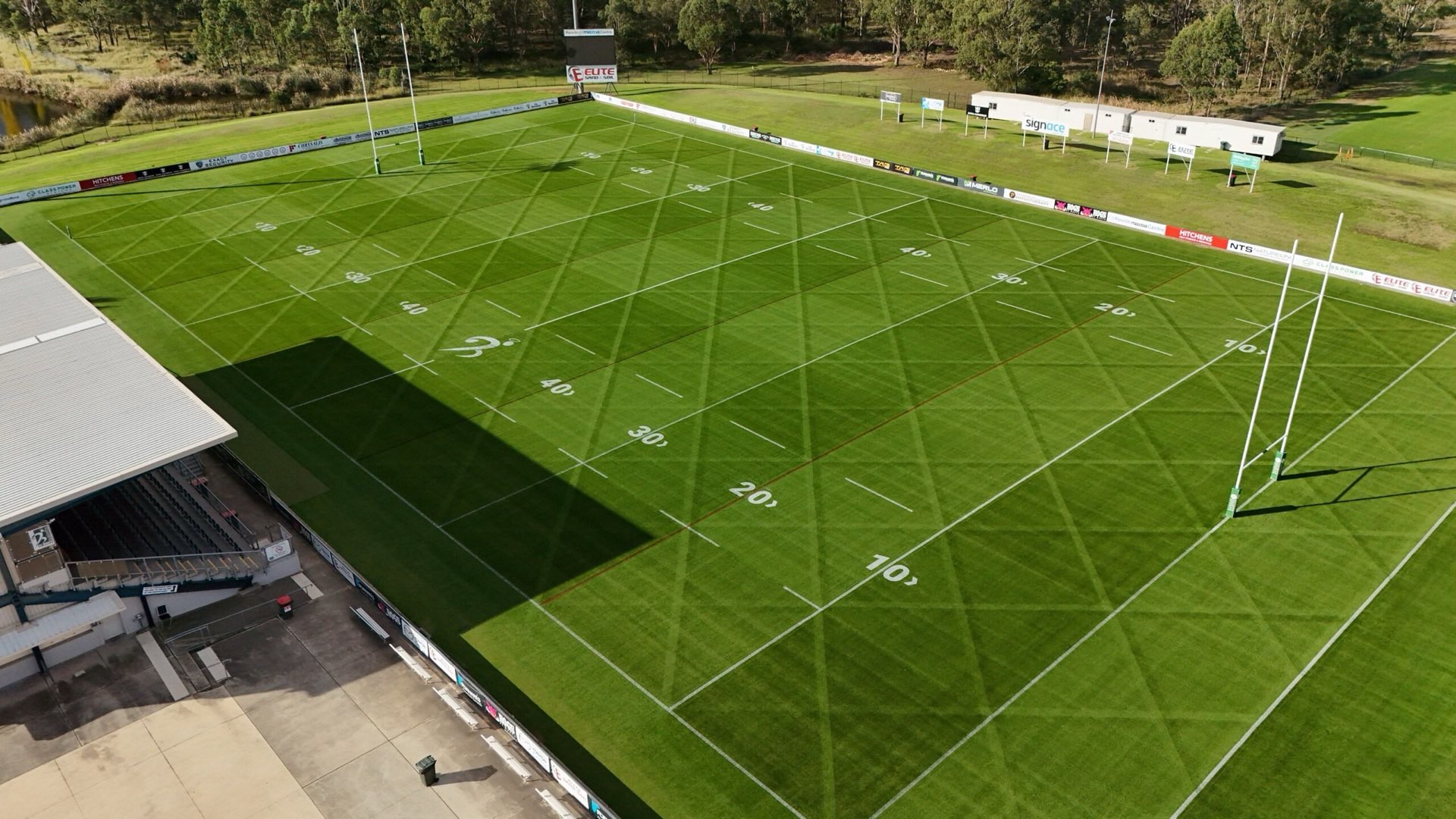
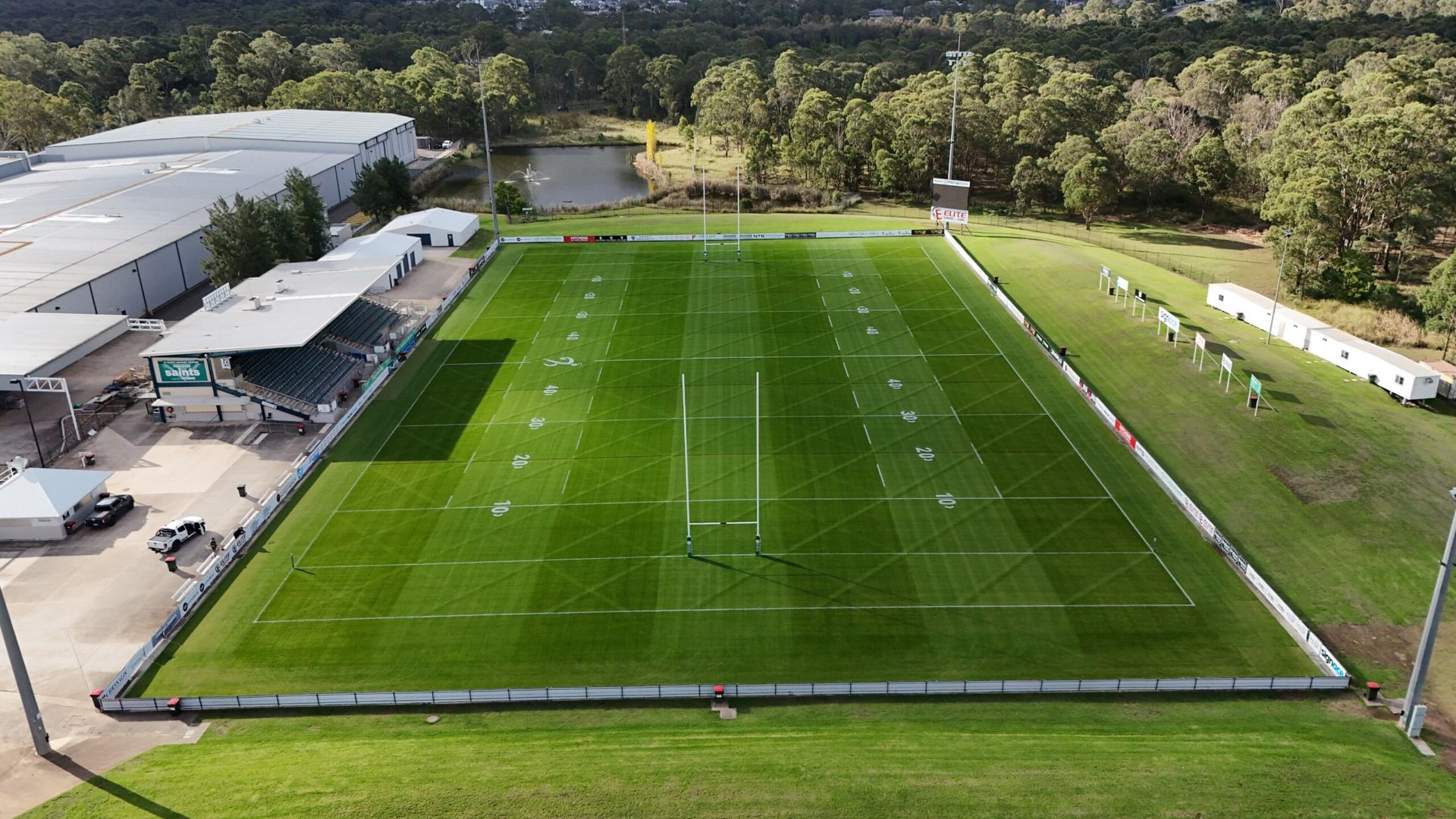
The proof is under the surface.
A tired reserve at St Marys, reconstructed from the subgrade up into a surface that drains and plays true.
Natural vs synthetic: making the decision
There is no universal answer. The right surface depends on how many hours the field will be used, the budget across its whole life (not just day one), and what the users actually need.
As a rule of thumb: a heavily booked ground serving multiple clubs, schools or codes across long hours often justifies synthetic despite the higher upfront cost, because natural turf cannot recover fast enough. A field with more moderate use, or where a natural playing character is preferred, is frequently better served, and better value over its life, by a well-built natural turf field.
How long does it take to build a sports field?
Timelines vary with the scope, the season and the weather, but the shape of a project is predictable. Design and investigation come first, then the construction sequence of earthworks, drainage, profile, irrigation and surfacing. For natural turf, the establishment period is the part people underestimate: the turf needs a genuine grow-in window, often spanning a season, before the field is match-ready.
The single biggest driver of timeline is planning ahead. Building or reconstructing in the right part of the year, so turf establishes into favourable growing conditions, protects both the schedule and the quality of the finished surface. A good contractor plans the works backwards from when you actually need to play, and is upfront about what that means for start dates.
How councils, clubs and schools should choose a contractor
Sports field construction sits at the intersection of civil earthworks, drainage engineering and horticulture. Plenty of businesses do one of those. The builders worth shortlisting do all three and make them work together.
Proven sports builds
Real field construction and reconstruction, not landscaping with a green finish, backed by references you can go and stand on.
In-house across the stack
Earthworks, drainage, rootzone, irrigation and turf under one team, so nothing falls through the gaps between trades.
Control of the materials
Command of the rootzone sand and drainage aggregate that decide how a field performs, not whatever turns up on the day.
Honest, itemised quotes
Prices that spell out the profile and drainage and compare on whole-of-life cost, not just the cheapest day-one build.
A realistic program
A schedule planned backwards from when you need to play, with turf established into the right growing conditions.
Where Elite Turf Projects fits.
We build and reconstruct sporting surfaces across Sydney and Western Sydney, from club grounds to council sports fields, ovals and greens. Because we are part of a family-owned Penrith supply and haulage group operating since 2013, the rootzone and drainage materials that make or break a field come from the same yard and travel on our own fleet: graded sands, soil blends and drainage aggregate supplied through Elite Sand and Soil and carried by Elite Haulage. One team stays accountable from subgrade to surface.
Frequently asked questions
The questions councils, clubs and schools ask us most before a build.
How much does it cost to build a sports field?
There is no single figure. Cost depends on the size of the field, how much earthworks and drainage the site needs, whether you build natural or synthetic, and the level of irrigation and finish. Compare quotes on whole-of-life cost, not just the build: a cheaper build that drains poorly or needs early renovation is not the cheaper field. Get itemised quotes that spell out the profile and drainage.
Is synthetic turf better than natural grass?
Neither is universally better; it depends on use. A heavily booked ground serving multiple clubs, schools or codes across long hours often justifies synthetic, because natural turf cannot recover fast enough. A ground with more moderate use, or where a natural surface is preferred, is frequently better value over its life as a well-built natural turf field.
Why does drainage matter so much?
Drainage decides whether the ground is playable after rain and whether the surface survives a full season. A good field combines surface falls with a subsurface network, and in Sydney's clay soils often adds sand slitting or gravel banding to link the surface to the pipe drains. Poor drainage is the most common reason fields close, waterlog and fail early.
How long before a new field can be played on?
After construction, natural turf needs a managed grow-in period, often spanning a season, to knit into the rootzone and build a root system strong enough for match loads. The exact window depends on the grass, the season and the weather. Handing a field over before it has established is a false economy.
Do you build fields outside Penrith?
Yes. Elite Turf Projects works across Sydney and Western Sydney, supplied and delivered on our own fleet from our Penrith yard. Call 1300 935 483 with your site and we will talk through what the job involves.
Planning a new field or a reconstruction?
Tell us the site, the codes it hosts and when you need to play. The Elite Turf team will walk the ground, scope the profile and drainage first, and come back with a plan and a firm price.